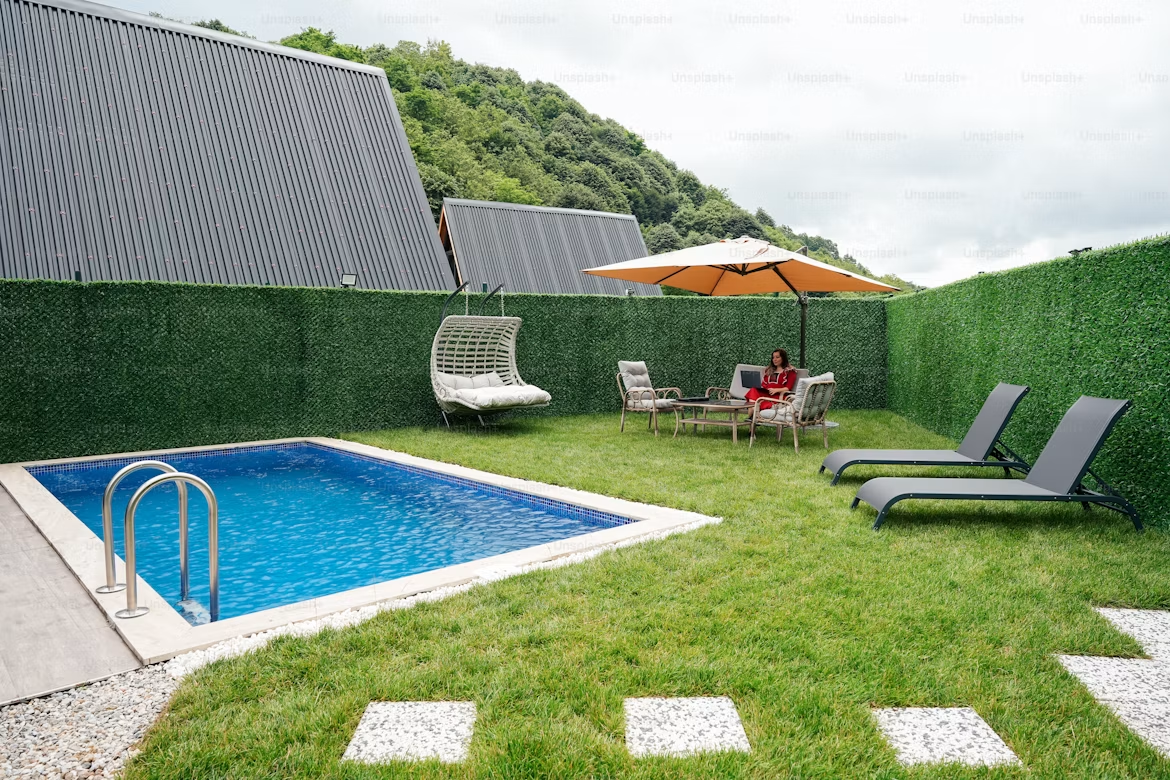
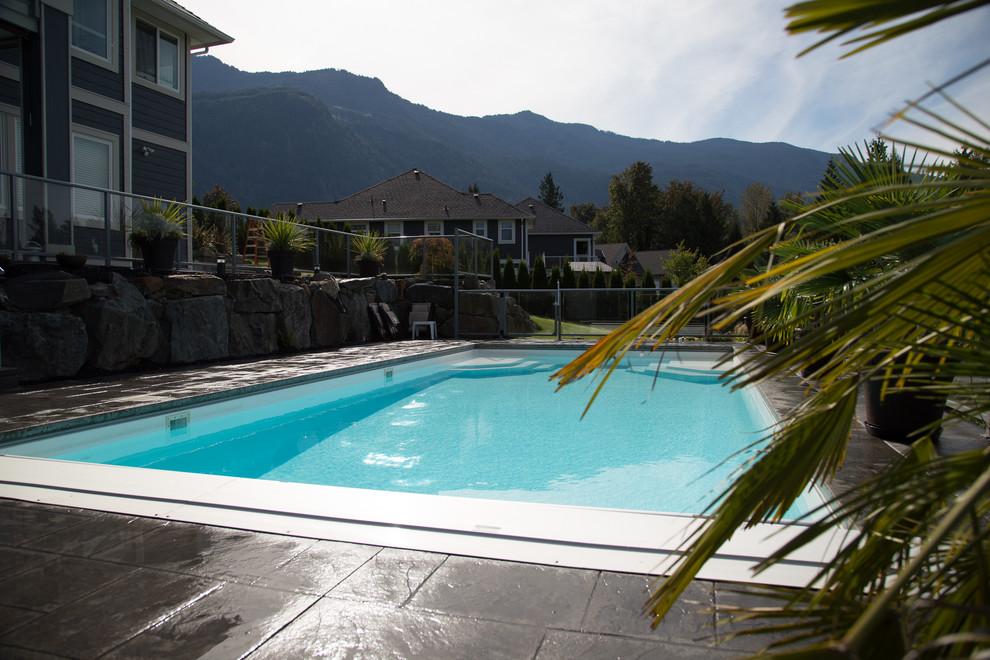
Let’s be real. Nobody gets excited about permits and paperwork when planning a pool.
Most people just want the fun part, the pool, the backyard setup, summer weekends. But before any digging starts, there are rules that need to be followed.
In BC, once a fiberglass pool goes beyond a certain depth, permits usually become part of the process. That includes safety rules, inspections, and making sure everything is installed properly.
It might feel like extra hassle at first, but these fiberglass pool installation rules are there for a reason. They help protect your property, your family, and everyone around the pool.
Understanding the basics early can save a lot of stress, delays, and extra costs later on.
First step – just pick up the phone
I know, nobody likes calling the government. But do it anyway. Call your local building department. Ask real-people questions like:
- “What permits do I actually need for a fiberglass pool?”
- “How far from my house and fence can I put it?”
- “Can my contractor handle all this, or do I have to?”
- “What’s the fine if I mess up?” (they’ll tell you, and it’s not pretty)
Don’t rely on what your buddy did in his yard three towns over. Rules change by city. What works in Abbotsford might get you a fine in Nanaimo.
The permits you’ll probably need – it’s not that many
People panic when they hear “permits.” But really, it’s just a few pieces of paper. Here’s the usual list:
- Building permit – for the hole and the pool shell itself.
- Electrical permit – because pools and stray electricity are a bad mix. This covers the pump, lights, and that weird grounding thing electricians talk about.
- Plumbing permit – if you’re hooking up to your house water or sewer.
- Operating permit – some cities want this before you fill the pool. It’s basically them saying “yep, looks safe.”
If your contractor says “you don’t need any of that,” run. Seriously. Run
Picking a contractor – don’t just take the cheapest quote
I’ve seen people hire a guy with a truck and a smile. Then the inspector shows up, finds ten things wrong, and the guy is gone. Now you’re stuck.
A good contractor for BC’s fiberglass pool installation rules will:
- Have a proper BC business license (ask to see it)
- Carry at least two million in liability insurance (not joking)
- Pull the permits for you – you shouldn’t have to chase paperwork
- Show you past fiberglass jobs, not concrete or liner pools
- Give you a written warranty, not a handshake
If they say “oh, just start digging, I’ll figure out the permits later,” walk away. Fast.
Where can you actually put the thing?

This is where most people mess up. You fall in love with a sunny spot in your yard. Then you find out it’s too close to the fence. Now you’re moving the whole plan – or paying a fortune to fix it.
Here are the rough rules almost every BC city follows:
- At least 1.5 metres from your house (unless it’s attached to a deck)
- At least one metre from any property line
- At least three metres from power lines overhead
- At least 1.5 metres from underground gas, water, or sewer lines
- And at least three metres from any neighbour’s window – because nobody wants to hear your kids cannonballing at 7am
Check with your city. These numbers can shift a little. But this is your safe starting point.
The fence – no way around it
Every year, someone tries to skip the fence. “Oh, my kids are older.” “I’ll just put a cover on it.” Nope. BC rules are clear: over 18 inches deep means you need a barrier. End of story.
Your fence or gate must be:
- At least four feet high (about 1.2 metres)
- Self-closing and self-latching – no propping it open with a rock
- Hard for a kid to climb (so no horizontal bars like a ladder)
- Kept locked when you’re not swimming
Some people use their house as part of the fence. That’s allowed, but then every door or window that opens to the pool needs an alarm. Loud ones.
Quick fence checklist so you don’t fail inspection:
- Gap at the bottom is less than four inches – no squeezing under
- Gate swings away from the pool, not toward it
- No chairs, planters, or toys near the fence that help kids climb over
- Swimming pool cover? Nice to have, but it doesn’t replace the fence
That electrical bonding thing – yeah, don’t DIY this

I’m not an electrician. You’re probably not either. And that’s fine. But here’s what you need to know: every metal part near your pool ladder, rail, light housing, pump has to be bonded together and grounded. It stops you from getting zapped when you grab the ladder with wet feet.
Hire a licensed electrician. Don’t let your cousin who “knows wiring” do it. Ask for a receipt and an inspection sign-off.
Signs of a safe electrical job:
- No loose wires hanging near the water
- All outlets are at least three metres from the pool edge
- GFCI protection on every circuit – those little buttons that pop out
- A visible ground rod near the pump
Inspections – someone will come look, and that’s a good thing
After the pool is set but before you backfill the dirt, an inspector shows up. They’ll check:
- The hole size and soil – is the ground stable?
- Where the pool shell sits – is it level and straight?
- The electrical bonding – did the electrician do it right?
- The fence and gate – do they latch properly?
- Plumbing connections – any leaks?
If you pass, you get the green light to fill it with water. If you fail, you fix whatever’s wrong and call them back. It’s not personal. They just don’t want you to have a disaster.
My advice? Be there during the inspection. Bring a coffee. Ask questions. Most inspectors are nice if you’re not a jerk about it.
What happens if you ignore all this?
I’ve seen neighbours call the city on each other over an illegal pool. One phone call, and suddenly you’re in trouble. Here’s what can happen:
- Fines – anywhere from five hundred to ten thousand bucks, depending on your city
- Stop-work order – you can’t do anything else until you fix it
- Tear-out order – yes, they can make you rip the whole pool out
- Problems selling your house – buyers will run when they see no permits
- Plumbing connections – any leaks?
Just don’t. Do it right the first time. You’ll sleep better.
Quick takeaways
- Permits protect you and your family. They’re not the enemy.
- Call your city before you even look at pool pictures online.
- Hire a contractor who knows the rules and pulls permits for you
- A four-foot fence with a self-latching gate is non-negotiable.
- Electrical bonding saves lives – get a real electrician.
- Inspections happen more than once. Be ready.
- Skipping rules costs more in fines and stress. Always.
FAQs
Depends. Small cities might take two weeks. Busy ones like Vancouver or Surrey can take two months. Start early, like, months early.
If you own the home and live in it, yes. But you still need permits and inspections. And honestly? Most people who try DIY end up calling a pro to fix their mistakes. Fiberglass shells are heavy and crack easily.
Not checking setbacks. They pick a spot because it looks nice, then find out it’s too close to the property line or a utility. Measure before you fall in love with a location.
Maybe. Your existing fence might be fine if it’s tall enough and has no big gaps. But you still need a self-latching gate. Get an inspector to look before you assume.
Yes, Kinsleypools.ca knows BC inside out. We handle permits for you so you don’t have to figure it out alone. Always ask any contractor upfront: “Are you pulling the permits, or am I?”
That’s rough. You might have to bring it up to code or even remove it. Always, always check permit records before you buy a house with a pool.
Final Thoughts
Look, permits and city paperwork are never the fun part of building a pool. But getting everything done properly at the start makes the whole project a lot smoother later on.
The key is to take it step by step. Work with the right people, follow the local rules, and don’t rush the process.
And when the pool is finished and summer rolls around, all that paperwork will be the last thing on your mind.
If you’re planning a fiberglass pool and want help getting the process right from the beginning, reach out to Kinsley Pools. Our team can guide you through the installation, permits, and everything in between so you can move forward with confidence.